Wait, you want birds to perch? +
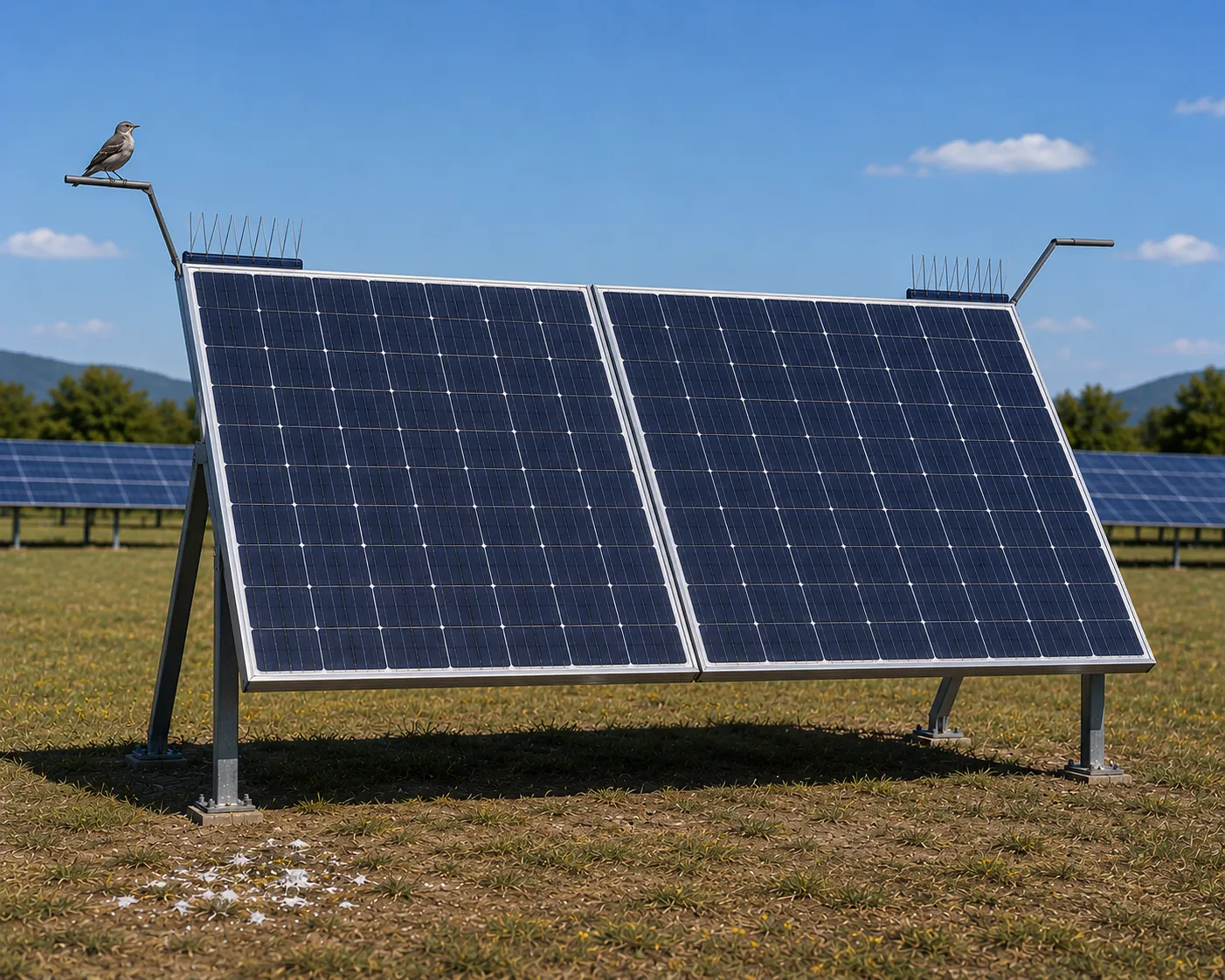
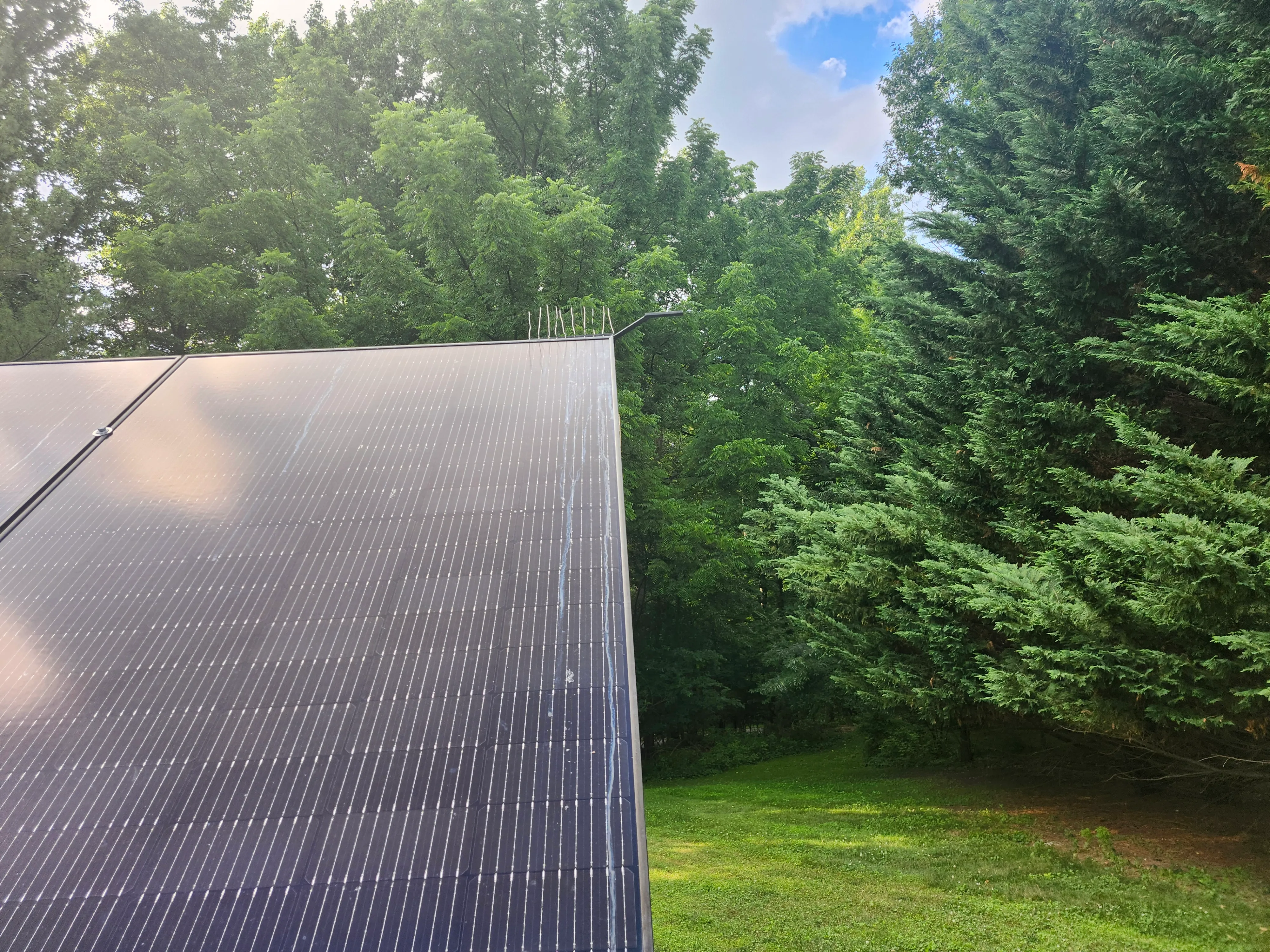
Yes, just not on your panel. Birds are going to land on a ground-mount array no matter what, the top corner is the best lookout for miles. PerchOff moves that perch a few inches off the glass, so the birds keep their view and the droppings miss your cells. Working with the behavior beats fighting it.
Can a couple of soiled cells really matter that much? +
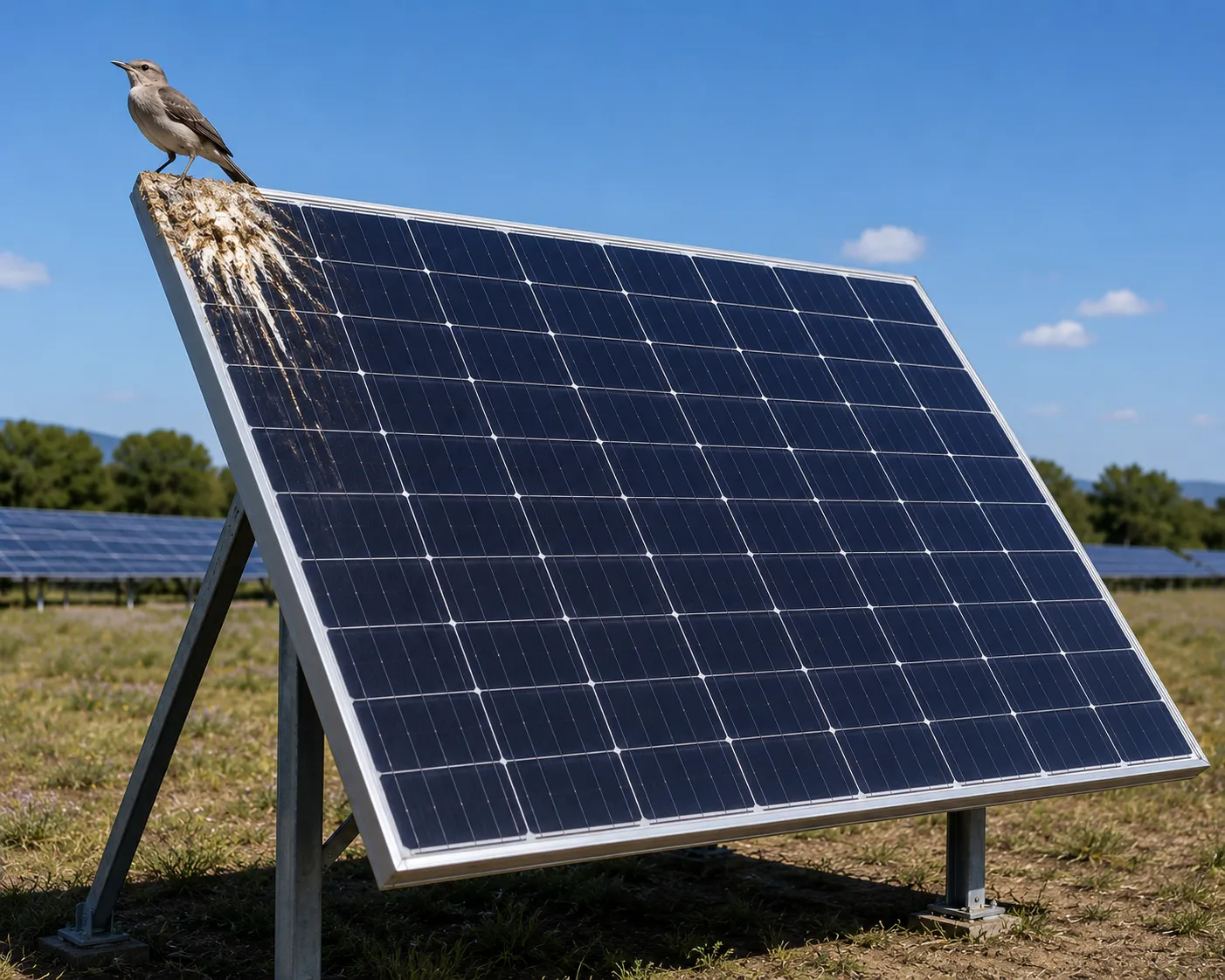
More than you'd expect. Solar cells are wired in series, so the whole string is throttled by its weakest cell, cover one and you choke everything wired to it. Bypass diodes split a panel into about three sections, so a single shaded corner can knock roughly a third of the panel offline. Soiled cells can also heat into hot spots that damage the panel over time.
Why do birds pick the corner of the panel? +
On a ground-mount array, the top corner is the highest clear vantage point over the field, ideal for scanning for insects and prey. It's prime real estate, which is exactly why scare devices don't keep them away for long.
Why not just put spikes everywhere? +
Because you don't need to, it's wasted cost and labor. Birds gravitate to the corners for the high lookout, so that's where droppings pile up on the same cells day after day. The occasional bird that lands mid-array keeps moving, so its mess never concentrates on one spot. Protect the corners and you've covered where the real damage happens.
Is it humane? +
Completely. The spikes deny one spot; the offset perch hands the bird a comfortable alternative with the same view. Nothing harms the bird, you're just changing where it sits.
What's it made of and will it last outside? +
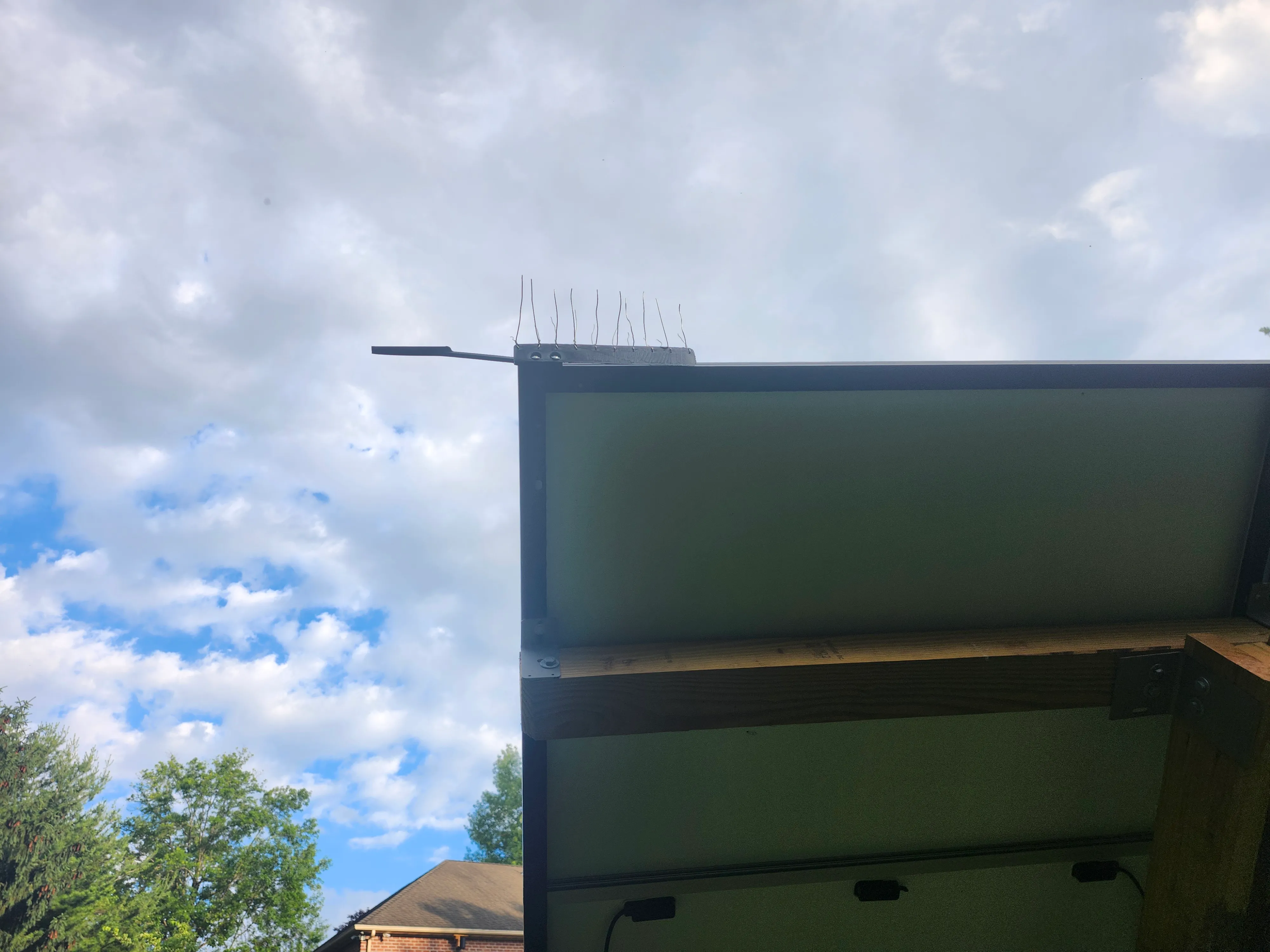
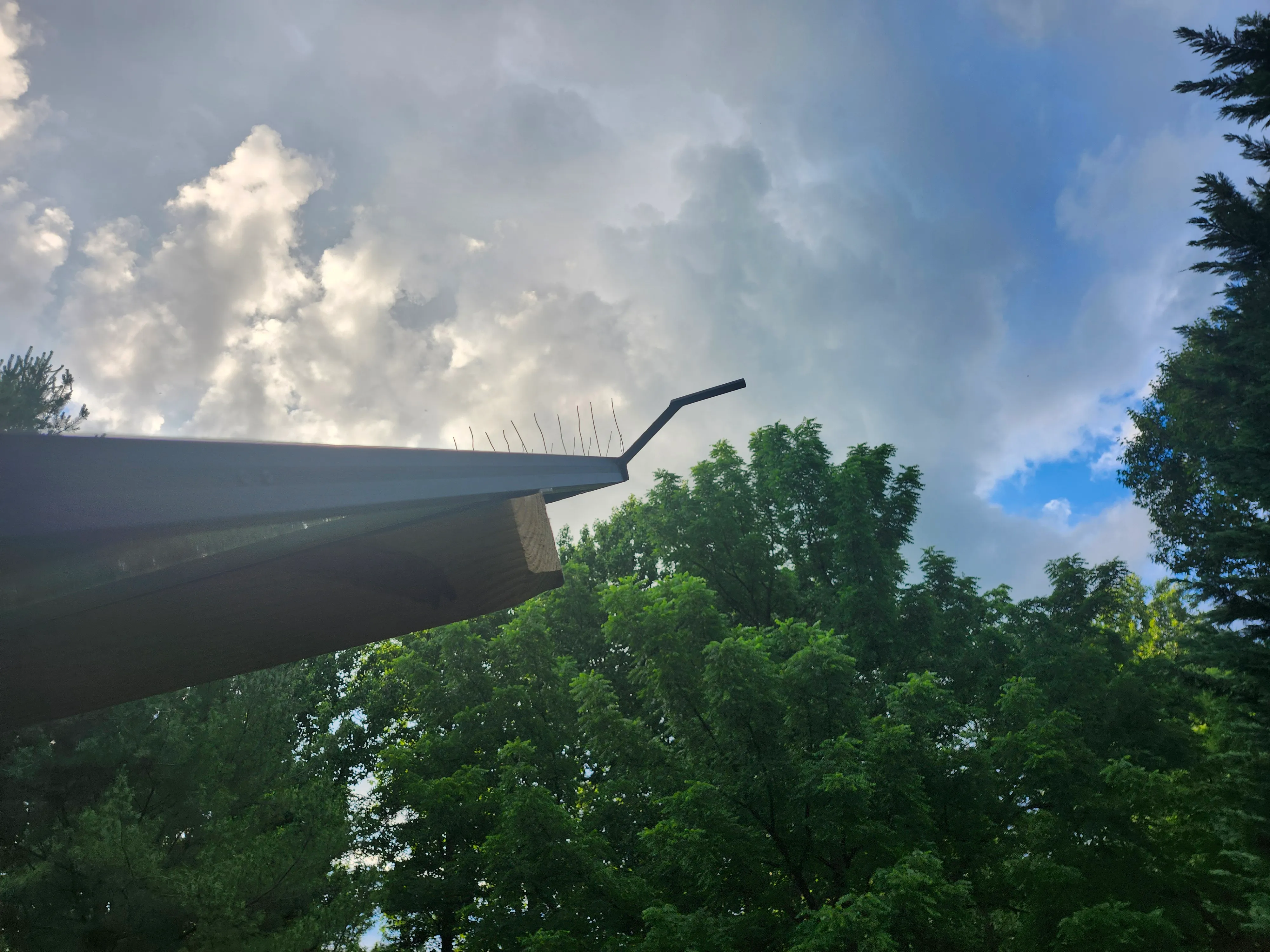
The body is printed solid in UV-stabilized ASA, no weak hollow infill, so it shrugs off sun, heat, and cold without going brittle or yellow like cheaper PLA. The 10 spikes and the screws are stainless steel, so nothing rusts. Built for years on an exposed array.
How does it mount and will it fit my panels? +
It screws down onto the panel frame for a permanent, rock-solid hold, no rattling loose in the wind. It fits any panel and the offset perch sits 200 mm clear of the edge so droppings fall well past the glass.
What's the price and when can I get one? +
PerchOff is sold as a pair (one for each top corner) for $35 shipped in the US, or $40 to Canada. We start the first production run once we hit our signup goal; waitlist members get first access, founding-batch pricing, and the ship date by email before anyone else. No payment is taken now.